
The world could be approaching a dangerous new era of cyber insecurity, as artificial intelligence exposes software weaknesses faster than companies and governments can repair them, prompting senior security experts to warn that critical infrastructure may soon be left dangerously exposed.
Jason Clinton, deputy chief information security officer at AI company Anthropic, has warned of a coming “vulnerability tsunami”, arguing that the speed at which flaws are discovered could overwhelm the ability of operators to protect essential systems.
“The vulnerability tsunami is coming in just a few months, and there won’t be enough time to patch critical infrastructure,” Clinton wrote on X, urging organisations to isolate sensitive systems from external networks.
“As bad as things have gotten in the past four days, they are going to get a lot worse before they get better,” he added. “We need to hold on for 18 months.”
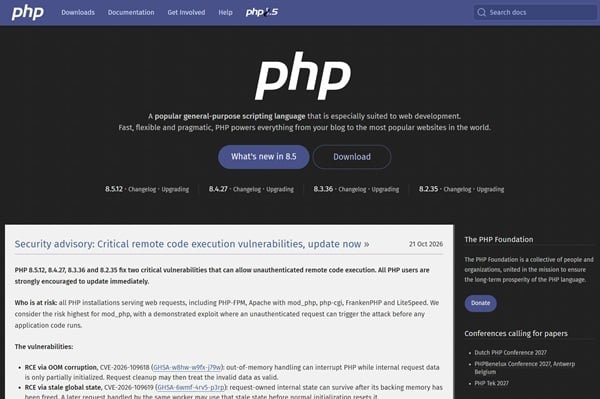
The warning follows a major cybersecurity crisis involving PHP, a programming language used by roughly 70 per cent of websites whose underlying technology can be identified. Two critical vulnerabilities prompted urgent security updates and forced organisations in several countries to take websites and online services offline while they assessed their exposure.
The incident has raised alarm because artificial intelligence helped researchers identify flaws that had remained hidden for years. Security specialists fear the same technology could enable malicious actors to discover and exploit weaknesses at a speed that conventional defences struggle to match.
The danger is not simply the number of vulnerabilities, but the shrinking window between their discovery and exploitation. Amazon reported detecting an attempted attack against a decoy system before the PHP flaws were publicly disclosed, while security agencies warned that unpatched systems could allow attackers to execute malicious code, steal information or gain control of servers.
The US National Security Agency, FBI and other cybersecurity authorities urged organisations to install the relevant updates immediately or take vulnerable systems offline if they could not be secured promptly.
The potential reach is vast. PHP underpins websites and services used for shopping, government information and online publishing. Organisations with outdated systems or limited technical resources may struggle to apply and test security fixes quickly, leaving gaps that attackers could exploit.
Financial institutions are also tightening controls around the growing use of autonomous AI agents. Morgan Stanley has blocked third-party agents from accessing its platforms, although a person familiar with the matter told Reuters that the bank had not observed unauthorised or rogue agents. JPMorgan Chase chief executive Jamie Dimon has separately warned against allowing outside agents into the bank’s systems without stringent safeguards.
“We’re not going to allow just any outside agent to come in inside the company because that’s just too risky for clients and for JPMorgan,” Dimon said.
For security teams, the emerging challenge is twofold: defending against attackers armed with increasingly capable AI while preventing autonomous tools from gaining excessive access to sensitive systems.
Clinton’s advice is immediate rather than theoretical: strengthen basic defences, review network exposure and isolate critical systems wherever necessary.
The warning is not proof that a global cyber catastrophe is inevitable. But the PHP incident has exposed a troubling imbalance between the speed of technological discovery and the capacity of organisations to respond. As AI accelerates both defence and attack, the margin for delay may be narrowing — with essential services potentially caught in the gap.





Leave a Comment