
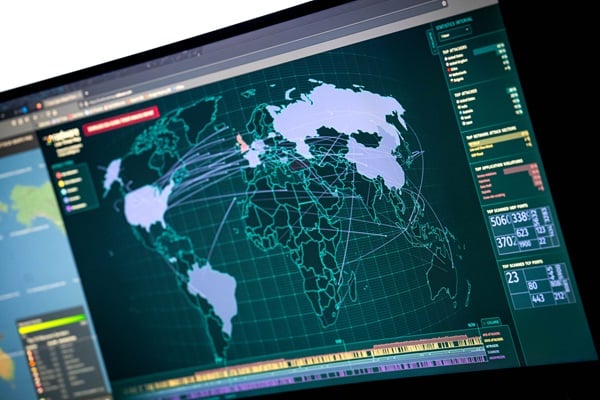
Suspected attacks in Sweden, Belgium and Luxembourg have raised fresh concerns about the security of supermarket cooling systems, as hackers increasingly target technology capable of causing physical disruption.
Supermarkets across Europe are facing a growing threat from cyberattacks that reach beyond stolen customer data and disrupted computer networks, with suspected interference in refrigeration systems raising the prospect of millions of pounds in spoiled food and serious disruption to retail operations.
Incidents reported in Sweden, Belgium and Luxembourg have emerged just weeks after attackers reportedly manipulated cooling equipment in hundreds of French stores, causing substantial food losses. The latest cases underline the vulnerability of operational technology (OT) — the connected equipment that keeps supermarket refrigeration, ventilation and other essential systems running.
For retailers, a successful attack can have immediate consequences. A compromised cooling system can allow temperatures to rise, forcing stores to remove chilled and frozen products from sale, interrupting operations and potentially putting food safety at risk.
Unlike conventional cybercrime, which often focuses on extracting information or holding corporate systems to ransom, attacks on operational technology can translate directly into physical damage.
These incidents illustrate why cybersecurity is no longer just about protecting information. When attackers interfere with operational technology, the consequences become physical,” says Michael Ferdinandsen, chief executive of Danish industrial cybersecurity company Secomea.
The growing reliance on remote maintenance has created a particularly difficult security challenge for supermarket groups. Refrigeration systems are frequently monitored by external specialists who need to access equipment across hundreds or thousands of stores. Technicians use remote connections to check temperatures, investigate alarms, diagnose faults and carry out maintenance without travelling to individual locations.
That connectivity is essential to keeping food fresh and limiting costly equipment failures. But it can also create openings for attackers if remote access is poorly protected, exposed directly to the internet or granted without sufficiently restrictive permissions.
“For retailers, the question isn’t whether they need remote connectivity. They absolutely do. The question is whether they have sufficient control over who can access their equipment, what they can reach, and what they’re allowed to do,” Ferdinandsen says.
The challenge is particularly acute for large supermarket chains, which may depend on multiple refrigeration contractors and technology suppliers, each using different systems and access arrangements. This can make it difficult for security teams to establish exactly who is connecting to critical equipment and whether those connections are appropriately controlled.
Many businesses have invested heavily in protecting conventional corporate networks, but industrial equipment presents a different problem. Refrigeration systems can remain in service for decades, often using technology that was not originally designed for today’s interconnected environment.
Many organizations have invested heavily in securing their corporate IT environments, but operational equipment often presents a different challenge,” Ferdinandsen explains.
“These systems were designed to operate reliably for years, sometimes decades. They weren’t necessarily designed with today’s connectivity and cybersecurity requirements in mind. Applying traditional IT remote access approaches without considering those differences can create unnecessary exposure.
The answer, security specialists argue, is not to eliminate remote access but to make it more tightly controlled. Retailers need to ensure technicians can reach the specific equipment required for maintenance without gaining wider access to internal operational networks.
Secomea’s approach uses edge gateways positioned close to industrial equipment, alongside centralised access management, individual permissions and audit logs. The system is designed to give organisations greater visibility over who accesses particular assets and when.
The technology is already used in the refrigeration sector. Danish monitoring specialist AK-Centralen uses Secomea’s systems to support remote monitoring of cooling equipment serving more than 1,500 supermarkets. The arrangement allows essential maintenance and monitoring to continue without requiring direct access to supermarket internal networks.
The implications extend well beyond food retail. Building management, energy distribution, manufacturing and logistics all increasingly depend on connected machinery maintained by external contractors. A vulnerability in these systems can threaten business continuity even when conventional corporate IT remains secure.
Remote-access controls are only one part of the defence. Network segmentation, software updates, vulnerability management and continuous monitoring are also needed to reduce exposure and detect suspicious activity.
Organizations shouldn’t have to choose between keeping their operations running and keeping them secure,” Ferdinandsen says.
The goal is to enable the remote support that modern operations depend on, while giving IT and security teams the governance and control they need. That’s particularly important when the systems involved directly affect physical operations.”
The precise methods behind the latest suspected attacks remain under investigation. But the incidents have exposed a risk that supermarket operators can no longer afford to treat as a purely technical concern: when hackers gain control of the systems keeping food cold, the damage can reach the shelves, the supply chain and the balance sheet.




Leave a Comment