
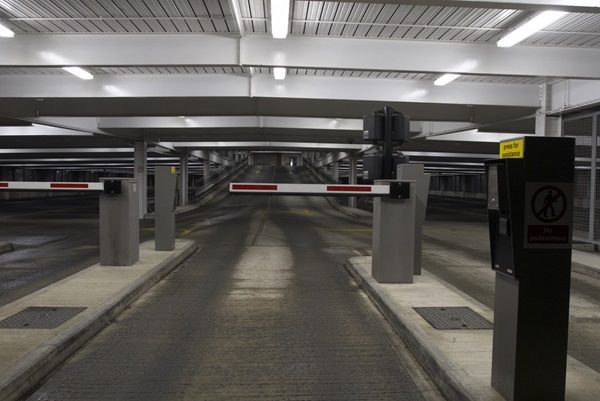
If you manage a busy parking lot, a logistics yard, or a corporate campus, you have likely seen the same scene: cars queue at the barrier, drivers search for cards or QR codes, and a small delay turns into a line. Slow entry is not just annoying, it can create security gaps like tailgating and inconsistent checks.
One practical fix is to identify vehicles automatically, at a distance, with minimal driver action. That is where long-range UHF RFID (radio-frequency identification) is increasingly used for efficient vehicle identification.
Why common entry methods fail at peak times
Manual checks, keypads, swipe cards, and QR codes can work, but they do not scale during rush periods. People forget credentials, phone screens do not scan in bright sunlight, and manual processes are vulnerable to human error. The hidden cost shows up as more staffing, more complaints, and more time spent troubleshooting access issues.
How long-range UHF RFID works
UHF RFID uses a reader and a tag, often placed on a vehicle windshield. When a vehicle approaches, the reader detects the tag and sends an ID to the access control system. If the vehicle is authorized, the barrier opens.
Unlike tap systems, it can work hands-free and at a longer distance. That matters when you want smoother parking access control in bad weather, at high-traffic entrances, or with mixed vehicle types.
A checklist for choosing the right setup
If you are comparing options for RFID gate access, focus on:
- Reliable reads in rain, dust, and metal-heavy environments
- Consistent performance when vehicles approach at different angles
- Fast throughput to reduce queues and keep lanes moving
- Easy integration with existing barriers and access software
- Simple administration for adding, removing, and replacing vehicles
- Room to scale to extra lanes, new sites, or changing policies
A purpose-built reader often considered for these scenarios is the Nedap Identification uPASS Go, designed for dependable long-range vehicle identification at access points where flow and security both matter.
Where hands-free vehicle identification pays off
Long-range RFID is not only for high-security facilities. It is often a quality-of-life upgrade in:
- Office campuses where employees enter without stopping to scan
- Residential complexes with fewer intercom calls and less gate congestion
- Parking operators aiming for smoother customer entry and fewer support tickets
- Industrial and logistics sites where faster truck processing helps keep schedules on track
Quick pre-install steps
- Map peak entry times and estimate vehicles per hour.
- Identify where queues form and whether you need one or multiple read zones.
- Decide how you will issue tags and handle replacements.
- Confirm how the reader connects to your barrier and access control system.
- Plan for exceptions like visitors, deliveries, and temporary permits.
- Set a review cadence for logs, denied entries, and maintenance.
The takeaway
Modern vehicle access control is not only about keeping the wrong cars out. It is also about letting the right cars in quickly and consistently. Long-range UHF RFID can reduce bottlenecks, lower operational hassle, and improve the day-to-day experience for everyone who uses your entrance.
If your gate is becoming a daily choke point, consider piloting hands-free vehicle identification on one lane first, measure queue time and denied entries, then scale what works.



Leave a Comment