

Elon Musk has never been shy about making bold predictions. Some have proved remarkably prescient, others wildly optimistic.
His latest forecast, however, is striking not because of its technological ambition but because of the economic assumptions underpinning it.
The Tesla and SpaceX chief believes artificial intelligence will surpass the combined intelligence of humanity within five years.
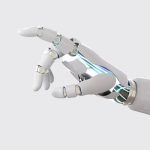
Within a decade, he argues, humanoid robots will perform most physical work while AI systems assume the majority of intellectual tasks.
The result, in his view, will be an economy defined not by scarcity but by abundance, where deflation replaces inflation as the central economic challenge and governments distribute a universal income to citizens displaced by machines.
It is an extraordinary vision. Yet beneath the futuristic rhetoric lies a debate that is rapidly moving from Silicon Valley speculation into boardrooms, central banks and finance ministries.
For decades, economists have assumed productivity gains create more jobs than they destroy. The Industrial Revolution displaced artisans but created factory workers. Computers automated clerical work but generated entirely new industries. The internet eliminated some businesses while giving birth to countless others.
Artificial intelligence threatens to test that assumption more severely than any previous technological revolution.
Unlike earlier waves of automation, which largely replaced manual or repetitive tasks, generative AI is beginning to perform cognitive work once considered uniquely human. It can draft legal documents, write software, analyse financial statements, diagnose medical conditions and produce marketing campaigns in seconds. Coupled with rapid advances in robotics, the technology is beginning to challenge both white-collar and blue-collar employment simultaneously.
That possibility explains why Musk’s prediction deserves attention beyond its headline-grabbing timeframe.
If machines become capable of performing most economically valuable work at negligible marginal cost, the consequences extend far beyond labour markets. Modern capitalism depends on wages generating consumption. Workers earn incomes, purchase goods and services, companies invest, governments collect taxes and financial markets allocate capital based on expectations of future growth.
A world where productive capacity expands while human labour becomes increasingly redundant would disrupt each link in that chain.
Musk argues the result could be unprecedented abundance. In theory, he is correct. If intelligent machines dramatically reduce production costs across manufacturing, logistics, healthcare and professional services, many goods could become significantly cheaper. Persistent deflation rather than inflation would emerge as the dominant macroeconomic challenge.
Yet abundance does not automatically translate into prosperity.
The critical question is distribution. If ownership of advanced AI systems remains concentrated among a relatively small number of companies and investors, productivity gains could increasingly accrue to capital rather than labour. Economic output may continue expanding while household incomes stagnate, widening inequality even as technology makes society wealthier in aggregate.
That is why discussions around universal basic income—or Musk’s preferred formulation of a “universal high income”—are becoming less theoretical. Such policies were once viewed as politically implausible. Increasingly, they are being examined as potential stabilisers for economies in which technological disruption outpaces job creation.
Whether governments could afford such programmes remains deeply contested. Financing large-scale income transfers while maintaining incentives for innovation, investment and entrepreneurship would require a profound redesign of modern tax systems.
Musk’s comments also reflect a growing recognition that artificial intelligence is becoming a geopolitical issue as much as an economic one.
His proposal for reciprocal oversight between leading American and Chinese AI laboratories is notable precisely because it runs counter to the prevailing mood in Washington. Rather than attempting to isolate China’s AI sector, Musk argues that transparency between rivals could reduce the risk of catastrophic failures before increasingly capable models reach the public.
The idea resembles nuclear confidence-building measures more than commercial competition. It acknowledges that frontier AI may become too powerful for individual companies—or even governments—to manage alone.
Equally striking is Musk’s assessment of China’s technological trajectory.
At a time when export controls have become central to US industrial strategy, he argues that Beijing remains well positioned to emerge as the global AI leader, citing its manufacturing base, energy infrastructure and rapidly advancing semiconductor capabilities. Whether that assessment proves accurate remains uncertain, but it reflects growing concern that the AI race will be determined as much by electricity generation, chip production and industrial capacity as by software breakthroughs.
Predicting technological timelines has always been hazardous. Artificial intelligence has experienced repeated cycles of inflated expectations followed by disappointment. Musk himself has often underestimated the complexity of engineering challenges.
Yet dismissing these forecasts outright would also be a mistake.
The pace of improvement in frontier AI models over the past three years has surprised even many researchers working in the field. Capabilities once expected later this decade have already begun appearing in commercially available systems.
The more important question is therefore not whether Musk’s timetable proves exactly right, but whether governments, businesses and financial markets are preparing for the possibility that it could be directionally correct.
If artificial intelligence does ultimately reduce the economic value of human labour on a large scale, the defining challenge of the coming decade may not be building more capable machines.
It may be redesigning an economic system built on the assumption that people will always be needed to do the work.


Leave a Comment